Why You Should Read "The Tin Drum" by Günter Grass, 1959
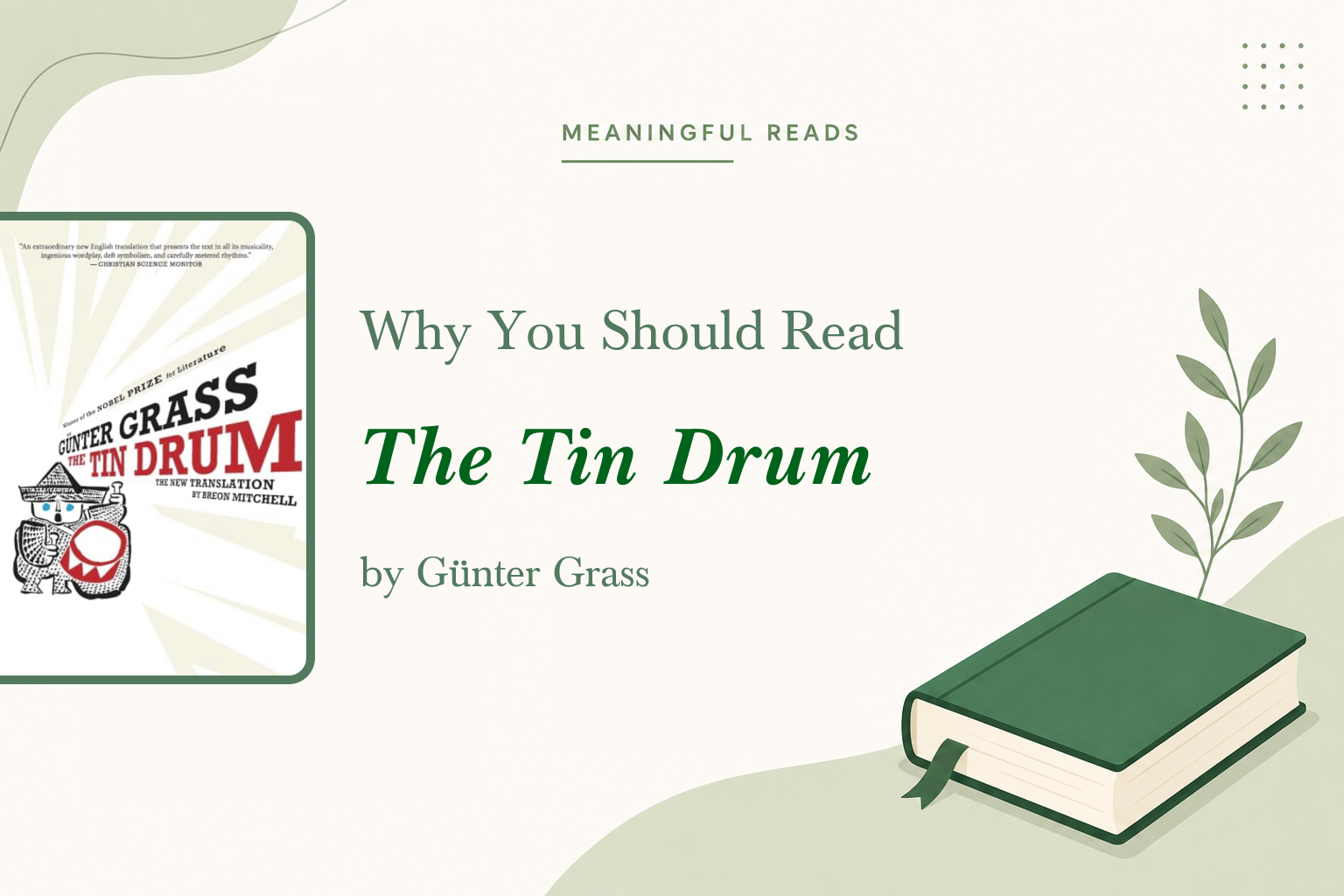
Why You Should Read This Book?
Why should you immerse yourself in "The Tin Drum"? This extraordinary novel is an invitation to journey through a brilliantly crafted world where surrealism and humor intertwine with profound social criticism. Günter Grass masterfully conjures a narrative that not only entertains but also challenges the reader to reflect deeply on human nature and history. At its heart is Oskar Matzerath, a boy who uniquely refuses to conform to the expectations of growth amid a turbulent world. This premise alone opens a door to an unusual but captivating viewpoint of 20th-century Europe.
The atmosphere of the book is truly something special. Grass’s vivid and inventive language paints an immersive landscape filled with powerful imagery and nuanced characters who feel remarkably alive. The narrative style is not just a storytelling technique but a vibrant experience that captures and holds your attention page after page. The story’s weaving of stark reality with magical elements creates an ambiance that is both haunting and poetic, offering a reading experience that stays with you long after you close the book.
Reading "The Tin Drum" is more than just engaging with a novel—it's stepping into a unique literary masterpiece. It provokes thought, invites emotional responses, and inspires insights about society, history, and ourselves. Whether you seek intellectual stimulation or a powerful narrative to savor, this book offers a rich and rewarding journey well worth your time.
Who is This Book For?
- Readers seeking a thought-provoking and innovative literary experience
- Fans of historical fiction with a surreal and poetic twist
- Those interested in European history and social commentary
About the Book
What is "The Tin Drum" about? Günter Grass's "The Tin Drum" introduces us to Oskar Matzerath, a boy who, in an act of defiance, decides to stop growing at the tender age of three. This choice, seemingly whimsical, unfolds against the dramatic and chaotic backdrop of World War II and the subsequent post-war period in Germany, adding layers of historical weight to the narrative.
The novel skillfully blends fantastical elements with pointed satire. It explores weighty themes such as innocence confronted with complicity and the complex forms of resistance against the tide of history. Instead of a straightforward historical recount, Grass offers a multifaceted narrative that captures the ambiguities and complexities of a society fractured by conflict and ideology. The tone often shifts from the surreal to the sharply critical, creating a poignant and sometimes unsettling reflection on the human condition during times of upheaval.
Grass’s storytelling is rich, layered, and atmospheric. His inventive narrative style and use of language invite readers to engage deeply, piecing together the nuances of each scene and character. "The Tin Drum" is as much a historical novel as it is a literary work that challenges the norms of storytelling, making it an essential read for anyone interested in the intersections of art, history, and morality.
About the Author
Who was Günter Grass? An eminent figure in 20th-century literature, Günter Grass was a German novelist, poet, and playwright renowned for his contribution to literary arts. His work earned him the Nobel Prize in Literature in 1999, recognizing his significant influence and mastery in the realm of letters.
Grass’s writings often wrestle with Germany’s complex history and moral questions. His unique style blends realism with surrealism and satire, enabling him to tackle difficult subjects with creativity and sharp critique. Beyond his literary pursuit, Grass was also a passionate political activist, investing his voice and work in addressing social issues and exploring the nature of identity and accountability.
His legacy endures through works like "The Tin Drum," which continue to inspire and provoke thought. Grass’s insightful examination of human and societal flaws combined with his inventive storytelling cements his status as a literary titan whose works are indispensable in understanding the cultural and historical fabric of post-war Europe.


Comments
Post a Comment