Why You Should Read "Midnight's Children" by Salman Rushdie, 1981
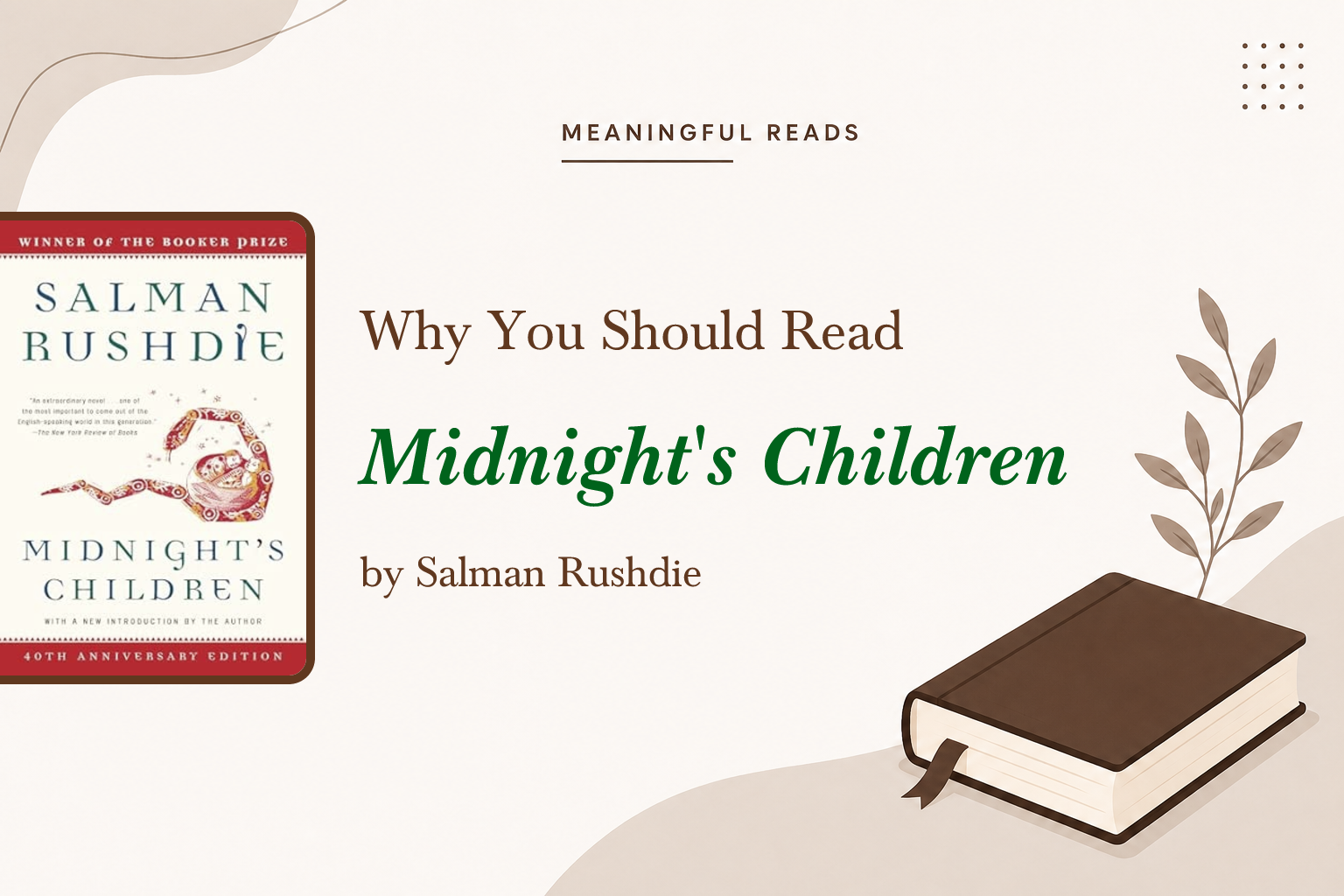
Why You Should Read This Book?
Midnight's Children by Salman Rushdie is a literary masterpiece that invites readers into a captivating world where history, magic, and personal destiny converge in a uniquely compelling way. This novel offers an enchanting blend of post-colonial India’s turbulent past combined with elements of magical realism, making you feel as if you are journeying through a timeless, vibrant tapestry full of cultural richness and complexity.
The novel’s atmosphere is wonderfully atmospheric and deeply immersive, drawing you into a narrative where reality intricately blends with supernatural phenomena, elevating traditional storytelling to a spectacular level. Whether you are drawn to rich historical narratives or evocative mythological motifs, Midnight's Children speaks to the heart of human experience and beyond.
Salman Rushdie's prose is nothing short of mesmerizing, weaving humor, tragedy, and vivid imagery with remarkable skill. The fluidity and lyrical quality of his language make every page a pleasure to read, inviting contemplation and reflection on identity, culture, and the intertwining of political and personal histories. Reading this book is a thought-provoking escape that challenges perceptions and redefines storytelling as an art form.
Moreover, it deepens your understanding of India’s complex colonial history in a way that facts and dates simply cannot. Through the life of the protagonist, you experience the soul of a nation on the cusp of transformation, imbued with hope, conflict, and magical possibilities. This rich narrative experience ensures that the book leaves lasting impressions and insightful reflections that resonate long after the last page is turned.
In essence, this novel is a literary journey that enriches your mind and touches your heart.
Who is This Book For?
- Those interested in post-colonial history and cultural identity
- Readers who enjoy magical realism and lyrical storytelling
- Anyone looking for a thought-provoking, richly layered novel
About the Book
Midnight's Children centers on the extraordinary life of Saleem Sinai, born at the stroke of midnight on August 15, 1947—the very moment when India gained independence. This historic moment, brimming with promise and turmoil, forms the canvas on which Saleem's life story is painted, creating a fascinating intersection between the personal and the national.
Rushdie's narrative style artfully merges fantasy and reality through the genre of magical realism, presenting unpredictable twists and turns that keep readers spellbound. The atmospheric world built within the book is rich with symbolism and allusions, offering layers of meaning that intellectually engage and emotionally move the audience.
The storytelling intricately explores themes of identity, cultural evolution, and the political upheaval of a newly independent India. By fusing political narratives with personal experiences, the author crafts a compelling saga that spans decades, inviting readers to contemplate the legacies of history and the power of storytelling itself.
About the Author
Salman Rushdie is a renowned British-Indian author celebrated for his innovative use of magical realism and incisive social critique. His distinctive narrative voice and literary artistry have made him one of the most influential contemporary writers, whose works are studied worldwide.
Rushdie has earned numerous awards and recognitions throughout his career, underscoring the depth and artistic merit of his storytelling. His ability to intertwine humor, politics, and personal dimensions has shaped modern literature and captivated readers from all walks of life.
With Midnight's Children considered by many as his magnum opus, Rushdie solidified his reputation as a master storyteller who uses language not only to entertain but also to provoke thought and engage with cultural identities on a profound level.


Comments
Post a Comment