Why You Should Read "A Farewell to Arms" by Ernest Hemingway, 1929
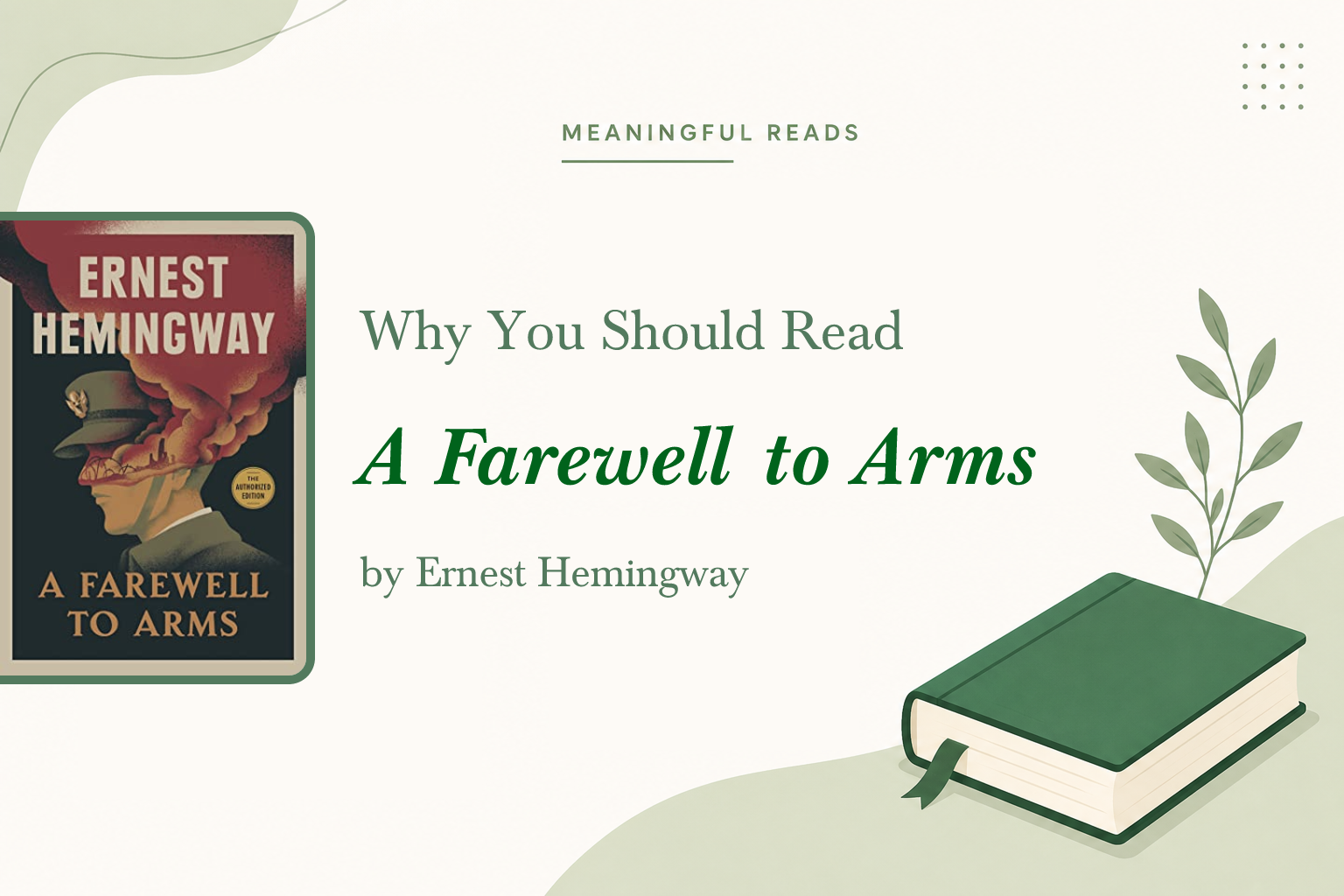
Why You Should Read This Book?
A Farewell to Arms stands as a profound literary journey into the depths of human emotion, capturing the raw essence of love, loss, and the turmoil wrought by war. This novel invites readers to immerse themselves into an epoch marked by vast uncertainty and emotional upheaval through the eyes of an American ambulance driver in the throes of World War I Italy. Hemingway’s hallmark minimalist prose doesn’t merely narrate a story; it plunges the reader directly into the core of passion and pain experienced by his characters, creating a visceral and unforgettable reading experience.
Its atmosphere is uniquely tense yet intimately personal, crafting a literary space where each word carries weight and emotional resonance. The novel's style, clear and unadorned, mirrors the stark realities it depicts, making profound emotions accessible with an elegant simplicity. Readers will find themselves reflecting deeply on human endurance as they journey alongside characters navigating the chaos of love and war.
This book is more than a story; it is an exploration of the human spirit’s resilience through hardship, and its vivid imagery and poignant narrative will leave a lasting impression that lingers well beyond the final page.
Who is This Book For?
- Those intrigued by historical romances that unfold amidst the dramatic backdrop of wartime.
- Readers who treasure succinct yet powerful writing that delves into profound emotional landscapes.
- Enthusiasts of classic American literature who appreciate character-driven tales rich in depth and nuance.
About the Book
A Farewell to Arms is a semi-autobiographical novel that intricately weaves the narrative of Frederick Henry, an American ambulance driver serving in Italy during World War I. At its heart lies a delicate romance with Catherine Barkley, set against the relentless chaos and devastation wrought by war. This portrayal transcends mere romance, delving into the emotional struggles, hopes, and stark realities faced by those caught in conflict.
Hemingway’s narrative approach is distinctive: employing economical and precise language to craft vivid, evocative scenes that blend harsh realism with poetic subtlety. The atmosphere sampled throughout the novel vacillates between moments of harrowing despair and heartfelt tenderness, capturing the full spectrum of wartime experience.
The novel’s central themes explore not only love and fear but also the elusive pursuit of happiness amid uncertainty, making the work an enduring examination of the human condition. Its compelling characters and masterful storytelling together create a timeless piece that continues to resonate deeply with readers across generations.
About the Author
Ernest Hemingway was a quintessential American novelist and short story writer, famed for his unique minimalist style and his daring life adventures. His literary works consistently delve into themes such as war, love, loss, and human resilience, all drawn from his own rich experiences as a war correspondent and participant.
Hemingway’s contribution to literature is monumental; in 1954, he was awarded the Nobel Prize in Literature, an acknowledgment of his profound influence and mastery. His distinctive prose style—characterized by clarity, brevity, and power—has inspired countless writers and continues to shape storytelling techniques worldwide.
His legacy endures not just through his remarkable stories but also through the emotional honesty and artistic precision with which he rendered the complexities of life. Reading A Farewell to Arms offers a glimpse into his genius and the indelible mark he left on 20th-century literature.


Comments
Post a Comment