Why You Should Read "The Castle" by Franz Kafka, 1926
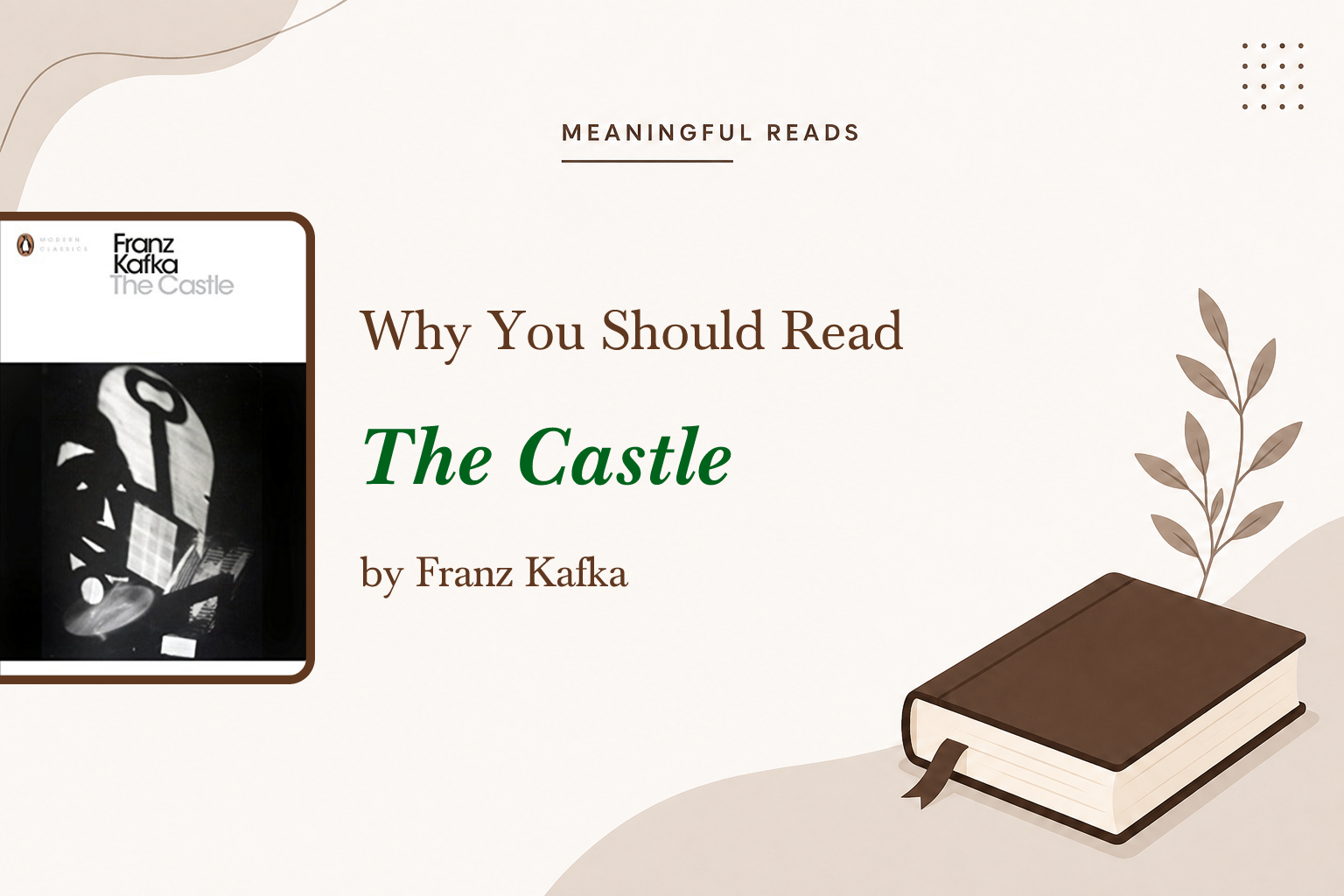
Why You Should Read This Book?
Why should you delve into the pages of The Castle?
This novel serves as a captivating invitation to immerse yourself in a mysterious and surreal universe where the boundaries between reality and dream blur seamlessly. The enigmatic village and its elusive ruler, the Castle, become more than mere settings—they are symbols, evocative and haunting.
Kafka’s masterful storytelling envelops you in an atmosphere thick with alienation and the relentless quest for understanding amid inscrutable authority. The book’s style is intricate yet compelling, with a narrative tone that lingers in the mind, provoking reflection long after the last page is turned.
Exploring themes of bureaucracy, existential disquiet, and human resilience, this novel is not only a literary journey but a poignant meditation on life’s perplexities. The fusion of a dream-like aura with philosophical depth creates a reading experience both profound and mesmerizing. It’s a timeless classic that challenges and inspires, making it an essential read for those drawn to literature that delves beneath the surface of human experience.
Whether you seek intellectual engagement or atmospheric escapism, The Castle promises a rich tapestry of existential intrigue and narrative complexity, making your reading experience deeply rewarding.
Who is This Book For?
- For readers who enjoy thought-provoking and surreal literary works
- For fans of stories that explore complex themes of authority and alienation
- For those interested in classic literature with a deep psychological and philosophical layer
About the Book
About The Castle
The Castle unfolds the story of K., a land surveyor who arrives in a strange, remote village overshadowed by an inaccessible and mysterious castle. His quest to gain legitimate access and permission to work sparks a journey rife with puzzling bureaucratic hurdles and elusive officials who seem to embody the ineffable nature of authority itself.
Kafka weaves a tale layered with bewilderment and frustration, exposing the absurdities embedded in modern institutional and social structures. The novel’s atmosphere is distinctly haunting—a delicate balance between the surreal and the familiar that both disorients and ensnares the reader’s imagination.
The tone is introspective and subtle, peppered with satirical nuances that paint a vivid picture of alienation and the human condition’s complexities. Despite its unfinished form, the book stands as a powerful exploration of existential uncertainty and the eternal human struggle to decode the opaque forces governing life.
Through rich and detailed narrative technique, Kafka draws you into a dream-like world where Kafkaesque motifs of isolation, disconnection, and the inscrutable weight of bureaucracy envelop every page, inviting you to explore layers of meaning beneath the surface of a seemingly simple quest.
About the Author
About Franz Kafka
Franz Kafka (1883–1924) was a Bohemian novelist and short story writer whose influence on literature is monumental and enduring. Known for his profound exploration of themes such as existential angst, alienation, and labyrinthine bureaucracy, Kafka’s works penetrate the depths of human psychology and the complexities of modern existence.
His storytelling uniquely blends precise, straightforward language with surreal, often disturbing scenarios, creating a compelling contrast that has captivated readers and scholars alike. Kafka’s distinct style has inspired countless writers, philosophers, and artists, ensuring his place as a cornerstone of 20th-century literature.
Beyond The Castle, his celebrated works include The Metamorphosis and The Trial, both of which continue to spark debate and interpretation with their vivid portrayal of individuals confronting overwhelming societal and existential pressures.
Kafka’s writings transcend time, offering insights that remain profoundly relevant in contemplating the human experience, power dynamics, and the elusive search for meaning in an often incomprehensible world.


Comments
Post a Comment